The Agentic Era Demands an Engineering Leadership Reset: Stop Tracking Speed, Start Tracking Scrutiny
For years, engineering leaders relied on cycle time, review turnarounds, and PR velocity to gauge team health and delivery. We gathered around many different dashboards created by Jira or Swarmia. With this, some people measured speed under a simple premise: faster deployment meant higher output. But those time-based metrics were really just proxies for human bandwidth, without the use of other metrics aligned, like number of incidents, MTTR and tech debt or quality checks, they can also hide something.
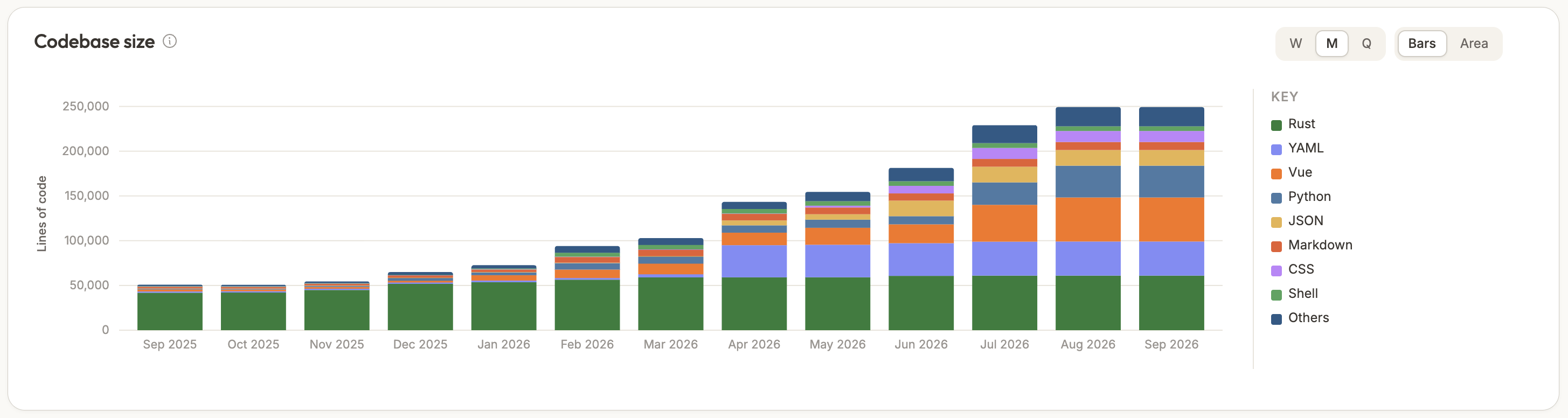
Equally now, AI agents have fundamentally changed this view. Teams now spin up features in minutes and everyone can code at lighting speed. Product and Tech employees are changing the SDLC to be more prototype first, design second and then continually fix in loops. As a result, PR volume has skyrocketed. What does this mean for engineering delivery management? Well, leaders are no longer managing a steady stream of human-authored code; they are triaging a constant flow of agentic outputs as well.
If your teams are using AI, tracking velocity with a stopwatch only mindset really stops being useful. As the primary bottleneck isn't writing code anymore, it's reviewing what lands in our repositories, steering agent quality, and keeping token spend under control.
In this world we can’t continue to optimize for raw velocity in an agent-assisted workflow, engineers will naturally take the path of least resistance: approving AI-generated code with minimal review.
In our customer environments we can see the moment AI adoption hits as some of the metric widgets just flatline. Which is why we need to look at the whole picture or whole context. Equally, not every company is going fully in on AI development practices, so traditional metrics are still valid for some.
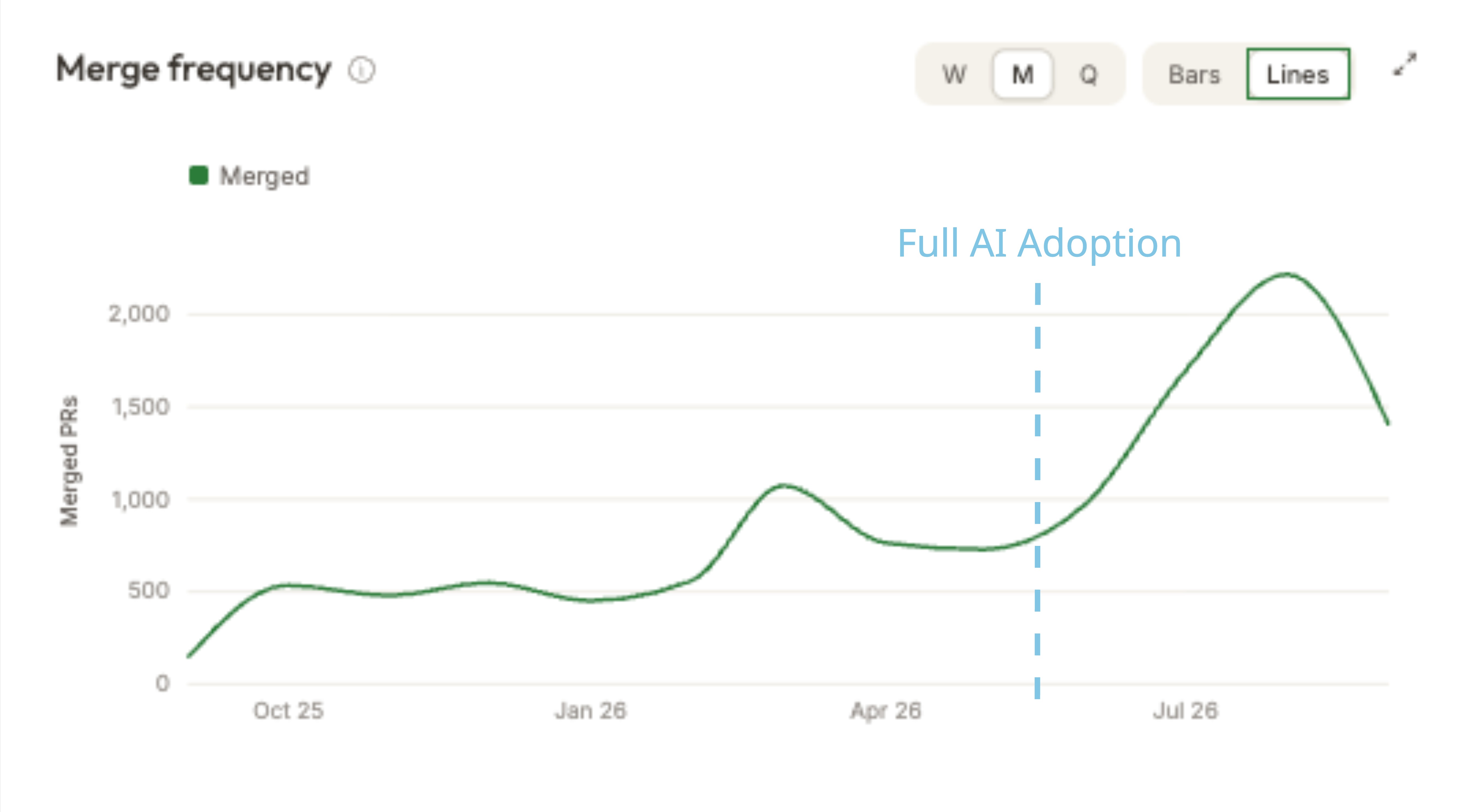
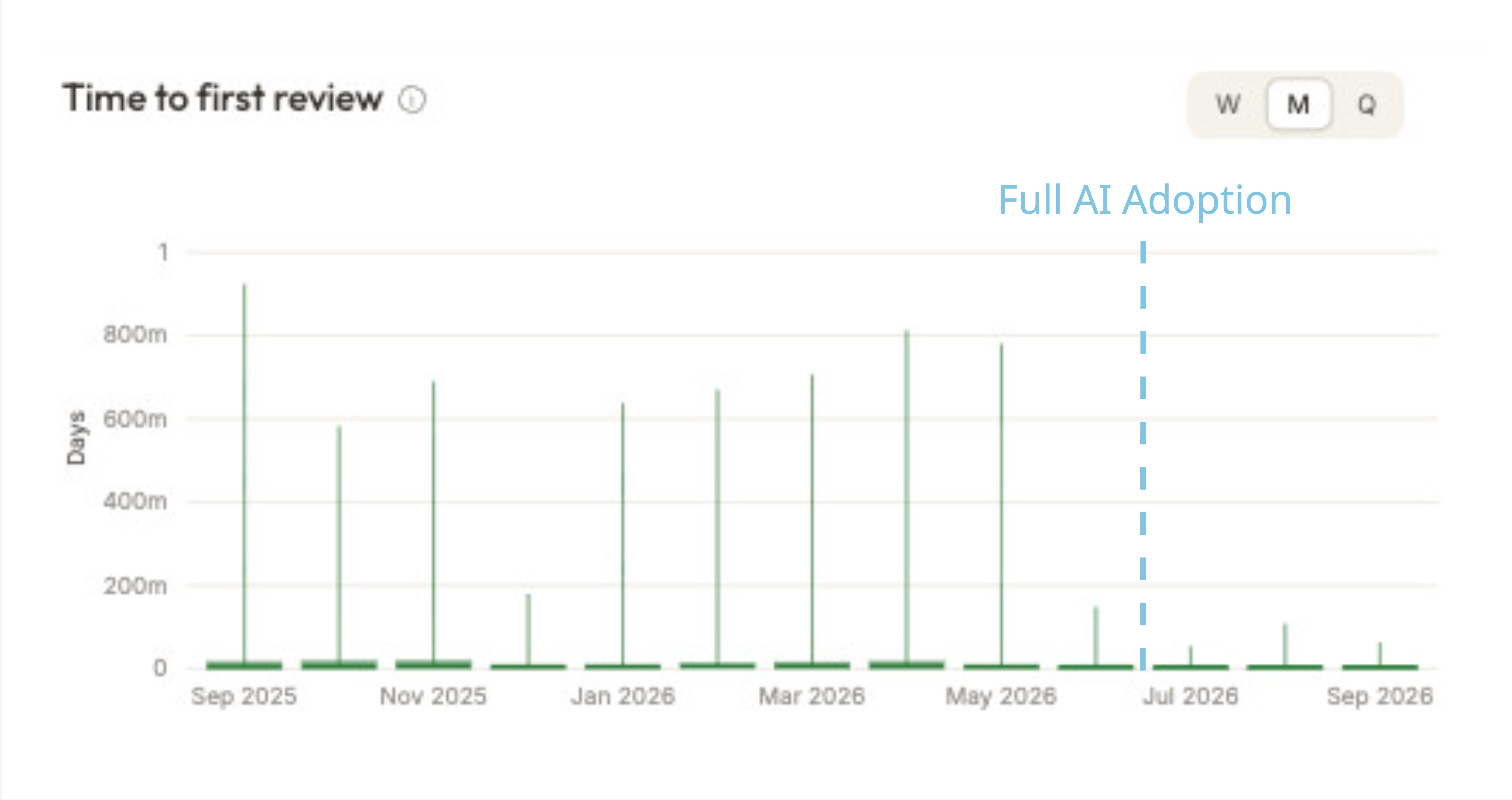
We believe that if you’re only tracking time based metrics in an agentic world then this isn't real productivity; it's an express lane for technical debt. To support our agentic teams effectively, we need to shift our metrics toward governance, token efficiency, and meaningful code scrutiny instead.
Here are four practical, quality-first signals to track instead:
Human Review Engagement: If you’re using AI tools and you have high PR volume paired with zero human inline comments then this usually signals passive approvals. Healthy engagement metrics show that engineers are actively interrogating design decisions, edge cases, and security logic rather than just stamping code through.
Token Efficiency & Tooling Drift: Automation metrics matter when costs or outputs get out of hand. Monitoring when bots are continually talking to bots and token consumption against output quality ensures agents resolve tasks cleanly without getting stuck in costly, unproductive loops.
Rewrite & Rejection Rates: Tracking how much agent-generated code gets modified or scrapped during review helps identify where system prompts, context windows, or initial specifications need refinement. In the agentic world, many rewrites show that your initial specs were probably incorrect or you didn’t give the agents enough context and architectural guidance.
AI-Attributed Defect Density: Categorizing post-merge issues by source provides an honest view of model reliability and highlights areas where review guardrails need strengthening.
Architecture and UI drift: even the best companies with the most stable architectural and design system foundations are experiencing drift by their agents. It's important to constantly monitor this and be alerted to avoid a serious change to your technical stack, months down the line
Our engineers' roles are evolving from sole authors into system architects, editors, and quality stewards. Updating our leadership playbook to reflect this operational shift ensures we support our teams in building reliable software sustainably.
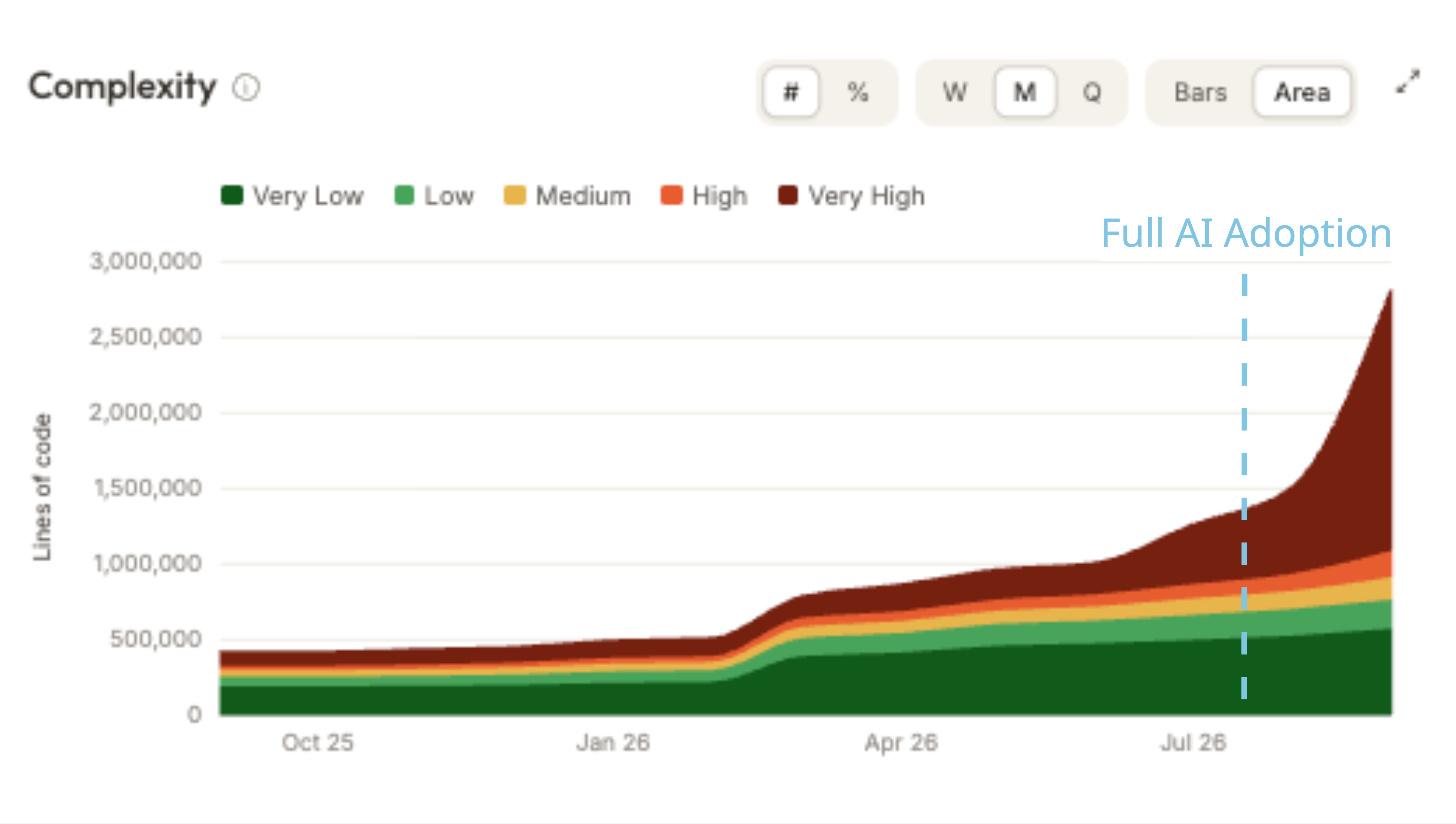
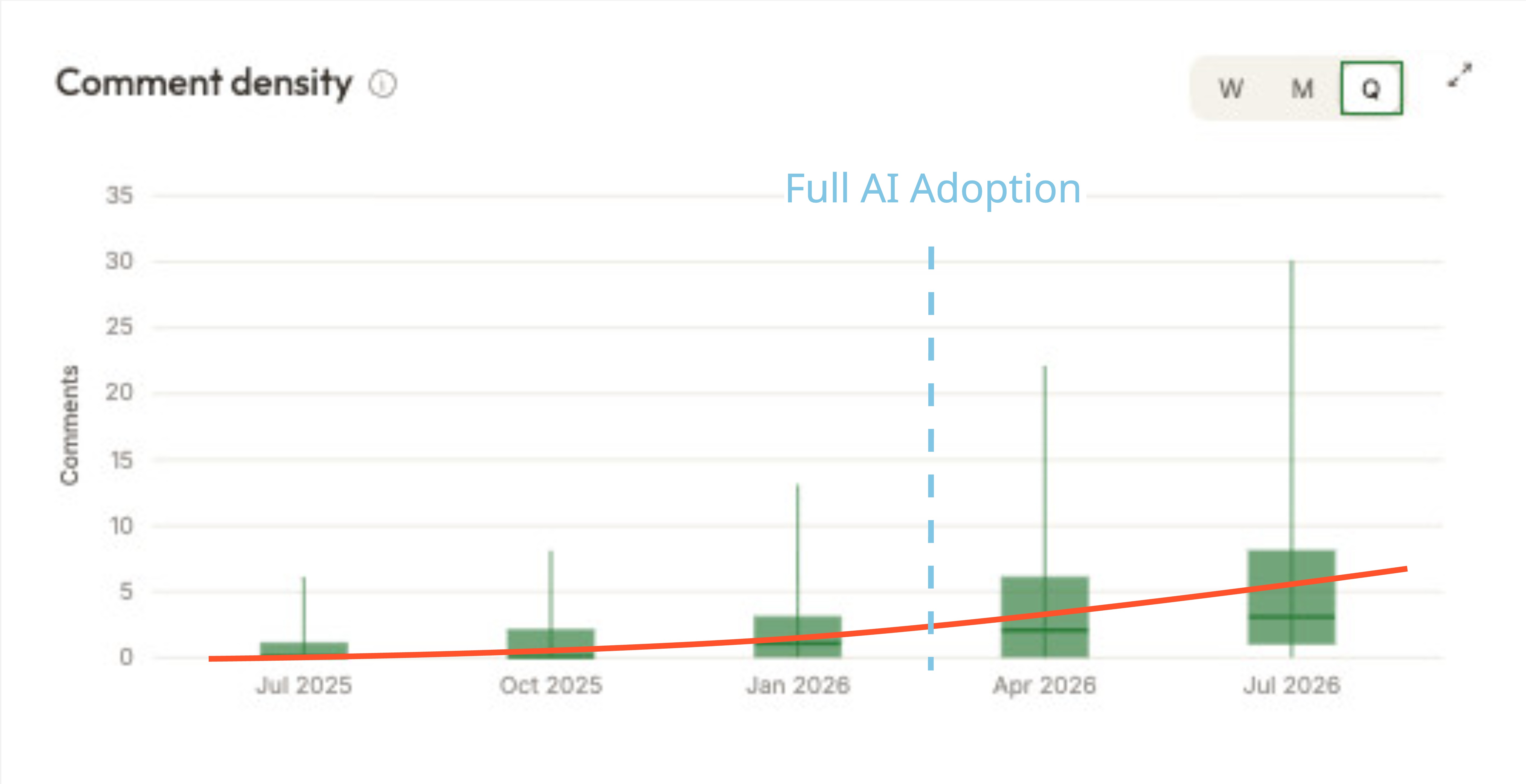
We are already seeing this transformation firsthand with our customers. Organizations leveraging these AI tools report that inline comments per PR are steadily increasing, time to merge request (MR) review has dropped to minutes rather than hours or days, and teams are achieving higher defect detection rates prior to release while maintaining a significantly more collaborative review process. Yesterday's metrics and dashboards hold no value for them anymore, which is why they are using Comper.
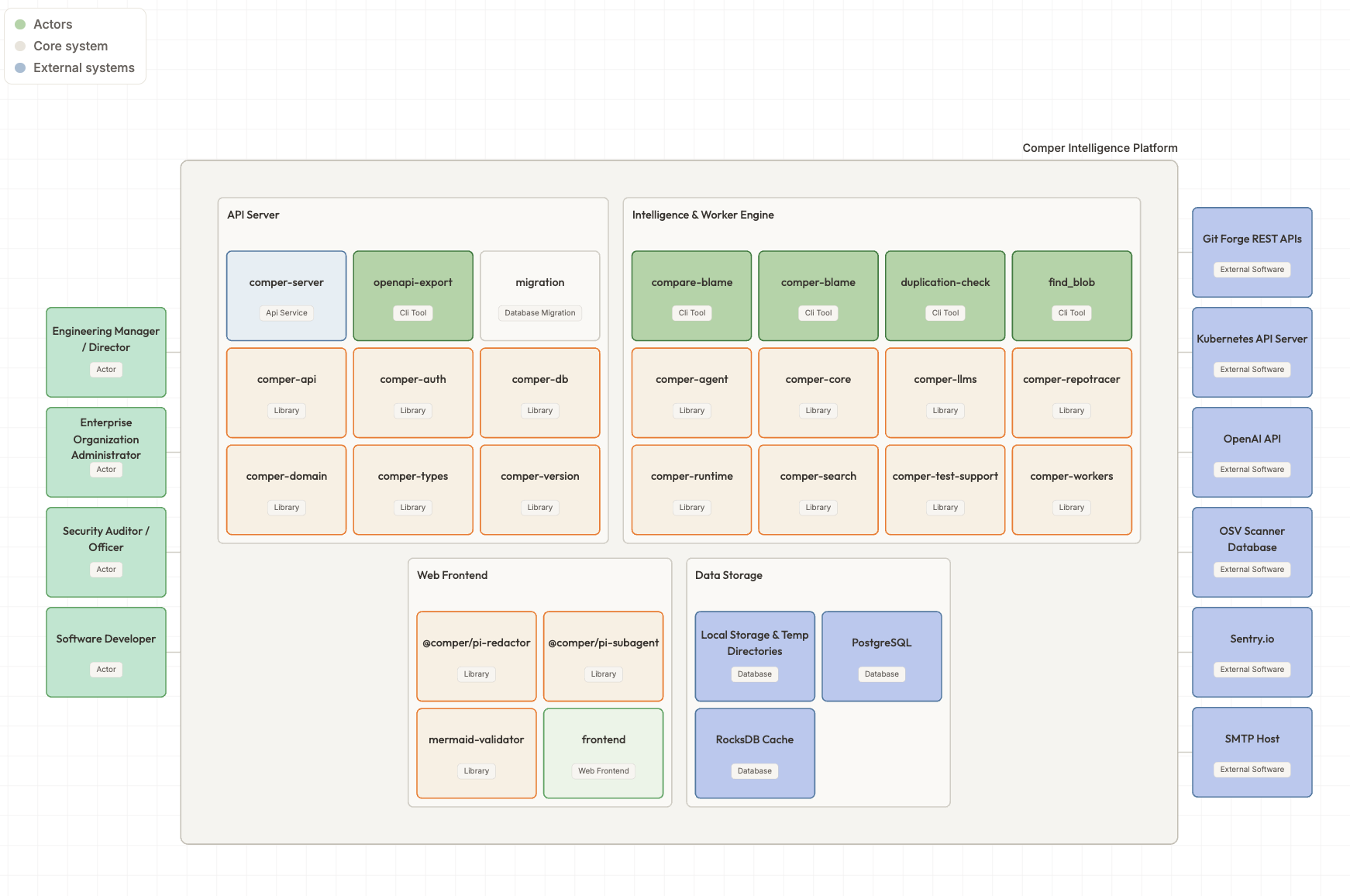
Comper's software intelligence platform delivers real-time visibility and governance across your entire development landscape. With persona-based dashboards it empowers engineering leaders and their product and engineering teams with the precise insights needed to maintain code quality, streamline reviews, and navigate the agentic era with confidence.