Computed, not maintained
Health scores, ownership, and architecture are computed directly from real Git history and static code analysis. No manual YAML registration, no stale portal data.
Swarmia shows its value once your team puts in the manual work: linking issues, tagging work and setting up teams. Comper needs none of that. It reads your source code and full Git history directly, so you get a deeper picture from day one.
Connect your repositories and Comper works from the code. No issue linking, tagging or team setup before you see results.
Comper reads the code itself: architecture, dependencies, ownership and product flows, not only the activity around it.
Comper analyses your entire Git history, so you can see how architecture, ownership and risk have changed over the years.
Legacy engineering tools force teams to buy, integrate, and maintain three or four separate platforms. Comper consolidates software context, engineering metrics, developer portal visibility, and code quality into a single, automated spatial canvas.
Health scores, ownership, and architecture are computed directly from real Git history and static code analysis. No manual YAML registration, no stale portal data.
An infinite, living, zoomable visual map connecting repositories, architecture diagrams, and team ownership in real time.
Native Model Context Protocol (MCP) context, AI tool adoption tracking, and agent-readiness scoring designed specifically for the AI coding era.
Replace separate subscriptions for engineering productivity (Swarmia), developer catalogs (Backstage/Port), and code quality engines.
Provides the foundations, services, and standards that enable developers to build and ship software efficiently.
Provides visibility into code health, quality, and engineering metrics to drive better decisions and outcomes.
Help developers and engineering leadership plan, build, test, collaborate, and deliver software more effectively.
The shared understanding of the codebase, systems, architecture and developer activity that connects everything.
Swarmia and Comper both give engineering organizations visibility into software development and make engineering data accessible through dashboards, AI, and MCP.
Computed continuously from every change pushed to your codebase. No Jira tagging, no manual configuration.
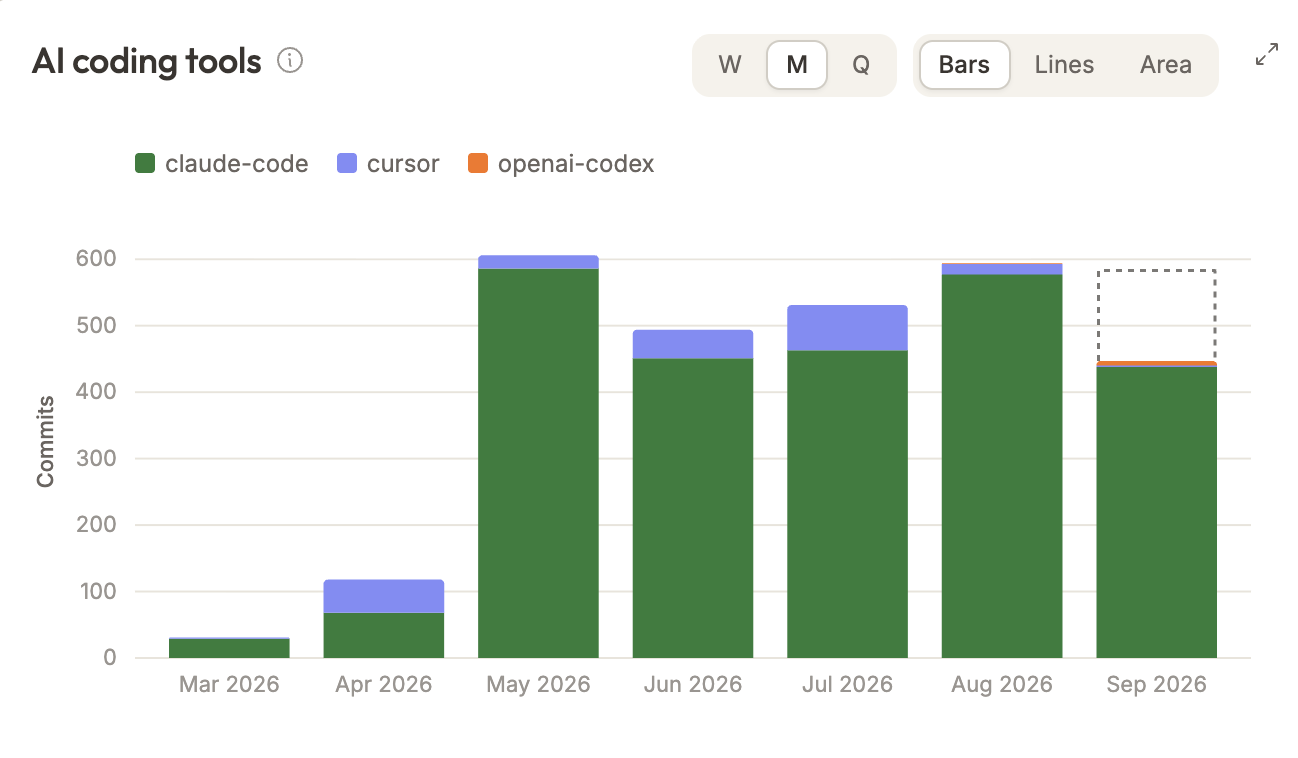
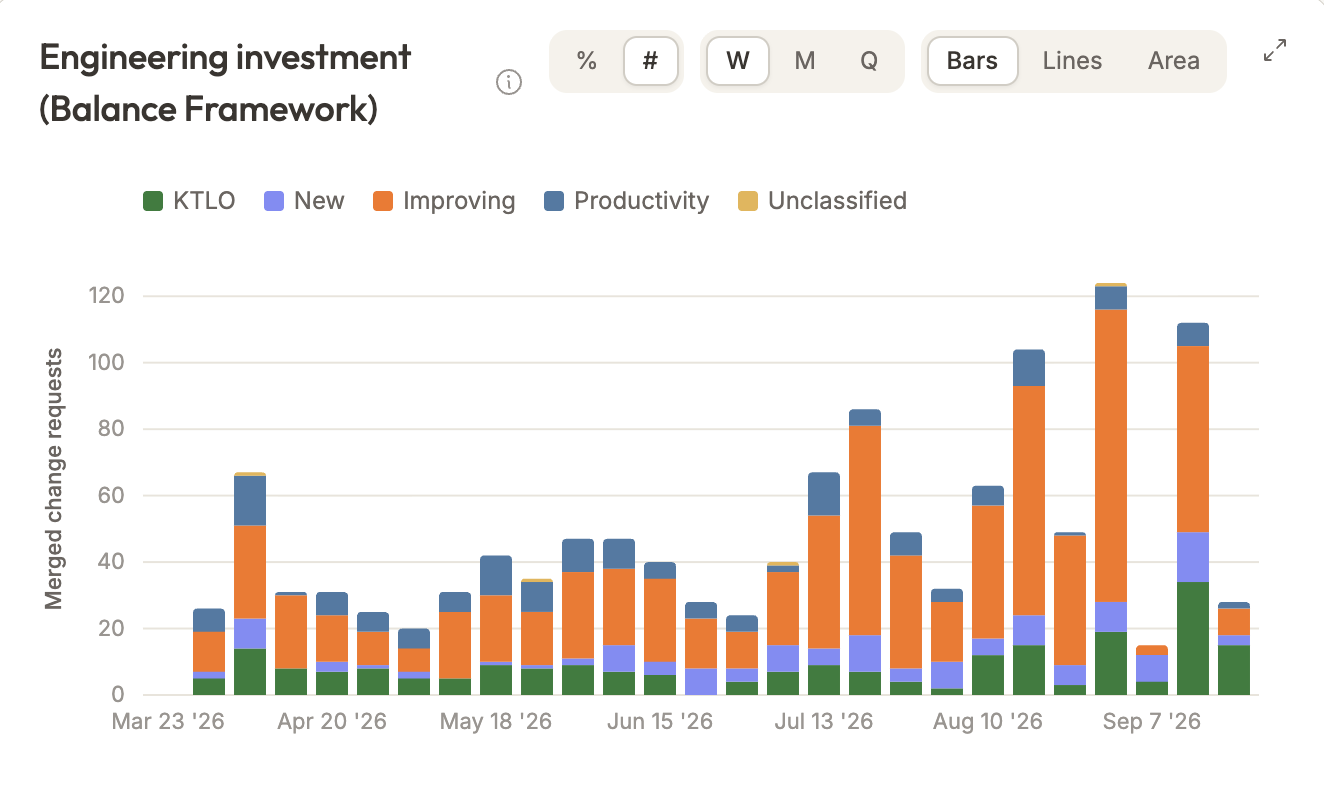
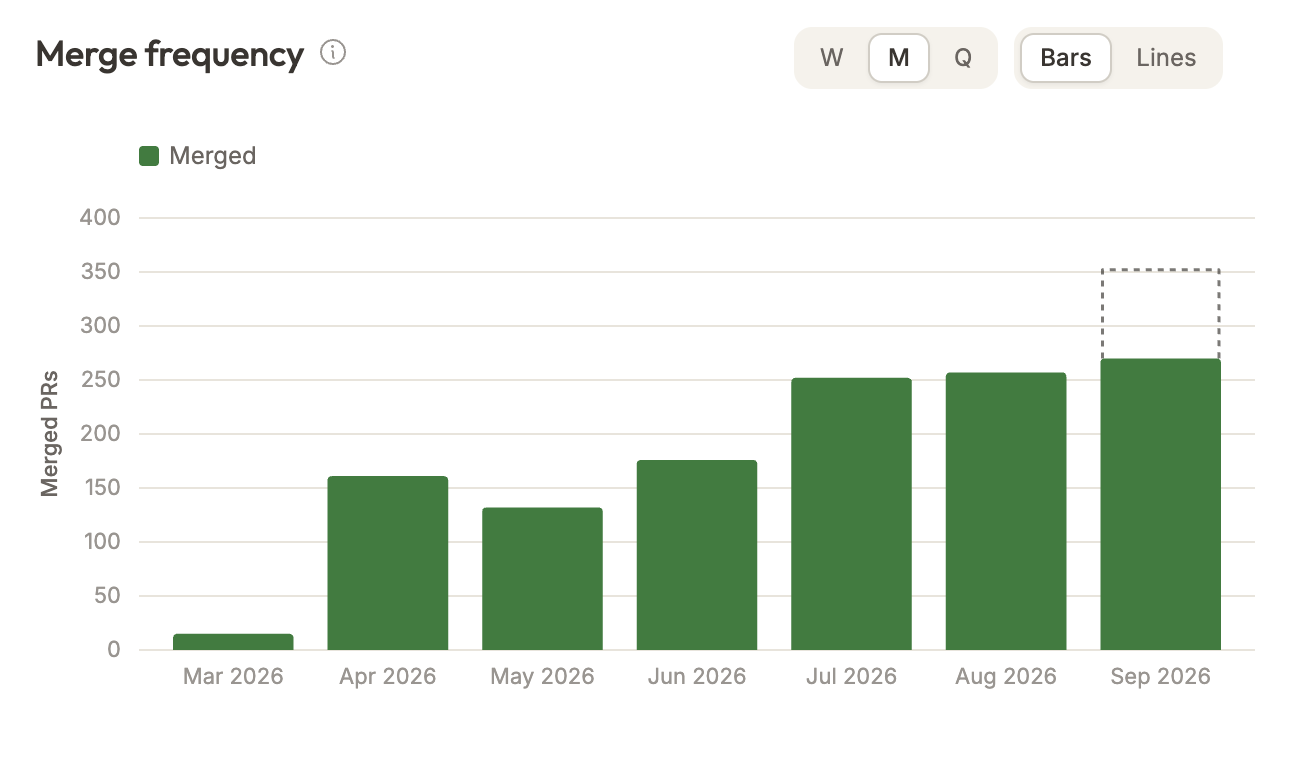
| Capability | Swarmia | Comper |
|---|---|---|
| No Jira / issue tagging required | Relies on linked issues | |
| Engineering productivity metrics | ||
| DORA / delivery analytics | ||
| AI adoption & productivity measurement | ||
| Developer experience surveys | ||
| Investment / engineering allocation | ||
| Source-code-level understanding | Limited | |
| Architecture mapping | ||
| Dependency graph | ||
| Historical software evolution | Limited | |
| Code ownership & knowledge | Contributor/activity based | Code & history based |
| Change impact analysis | ||
| Product journey → technical implementation | ||
| Living technical documentation | ||
| AI-ready software context | Limited to engineering data | |
| MCP | ||
| Context for product & leadership | Engineering-focused | |
| Context for AI agents | Engineering metrics & data | Software context |
| Deployment options | SaaS only | On-prem or SaaS |
| EU hosting / GDPR |
Engineering activity → Metrics → Insights
Swarmia helps you understand how your engineering organization is operating.
Source code + history → Software Graph → Context
Comper helps you understand the system your engineering organization is operating on.
Different questions require a different model of the software.
Software shouldn't only be understandable to the engineers who happened to build it.
Understand dependencies, architecture, ownership, technical debt, historical changes, and impact before touching the code.
Connect features and customer journeys to their technical implementation, engineering investment, complexity, and ownership.
Understand where software investment is going, where organizational knowledge is concentrated, and where technical decisions create business risk.
Give agents persistent context about the systems they're modifying rather than asking them to rediscover the company one repository at a time.
The underlying software is the same.
Comper simply makes it understandable from every perspective.
Choose Comper when you want productivity metrics and a real understanding of the software itself, in one platform.
Productivity, investment and AI adoption metrics come continuously from every change pushed to your codebase, with no Jira tagging and no manual configuration.
And when metrics alone can't answer the question, Comper gives humans and AI agents the context: who built what and why, what depends on it, and what a change will affect.
Choose Swarmia if your main problem is engineering productivity measurement.
If you need to establish engineering productivity measurement, monitor DORA and workflow metrics, measure AI adoption, run developer experience surveys, or produce software capitalization reports, Swarmia is built specifically around those workflows.
It's a strong engineering intelligence platform. And sometimes that's exactly what you need.